Posts

My Talk in the Department of Chinese Literature, Peking University

Image
Thanks to Professor Qi Yongxiang and Li Changran's invitation. I delivered a lecture based upon my new reflection on my 2015 book  China's Transition to Modernity . The written version of the talk will be published in 2020.

Xiaowei Zheng's review of Cosmopolitanism in China, 1600–1950

My friend Xiaowei Zheng's review  of Cosmopolitanism in China, 1600–1950 is published on  Frontiers of Literary Studies in China  Volume 13, issue 1 (January 2019): 157–164. We appreciate her insightful critique that our theoretical use of cosmopolitanism remains incoherent and somewhat shallow. To clarify our editorial principle, I would like to borrow some lines from R. Bin Wong's review of our book: "The volume shows the meanings of cosmopolitanism for different kinds of people in Qing China, including Manchus, Muslims, Koreans (in relation to the Qing, if not in the Qing). It further explicates the multiple framings within which different modalities of cosmopolitanism were achieved, including Buddhist and Confucian. It also shows cosmopolitanism not merely as a feature of thought, but suggests implications of such approaches in matters of governance." Please see Cambria Press' link to our book. It has been three years since the volume was published in 20...

Talk at the Advanced Institute of Confucian Studies, Shandong University

Image
I left Guangzhou for Jinan, Shandong and delivered a talk to an exciting audience on the nexus of Confucianism and science. My host took me to the Archaeological Museum of Shandong University. It was very impressive!!

Talks in the History Department, Sun Yat-sen University

Image
Thanks to my friend An Dongqiang 安东强, I delivered two talks at the Department of History in Sun Yat-sen University. It was great to meet so many interesting friends and to see Guangzhou for the first time!

Visiting the University of Tokyo, Komaba Campus

Image
Thanks to my friend and colleague Professor Ishii Tsuyoshi, I am leaving on Nov 29 for Tokyo to teach an intensive seminar on the Komaba campus. I will also give a talk on Dec 22, hosted by Professor Ito Takayuki. For details, please see the flyers in Japanese.

Professor Dagmar Schäfer's Review of China's Transition to Modernity

Image
I have reviewed about ten books for different journals and read many book reviews in the past two decades. I am pretty certain that I have received a "glowing" review from Professor Dagmar Schäfer. What I am about to say is not really a disclaimer but an appreciation of how academic review system actually works in my case. I never met Professor Schäfer and have virtually no professional relationship with her. Of course Professor Schäfer's reputation proceeds her. I have read and admired her award-winning book and assigned part of it to my undergraduate students before. I have also heard good things about her. For instance, my co-editor Johan Elverskog spoke highly of her work. More importantly, China's Transition to Modernity had not been reviewed by a historian of science until hers appears on Harvard Journal of Asiatic Studies in June 2018. To be recognized and appreciated by an outstanding fellow historian whose expertise falls squarely in my field is qui...

Jee Hyun Noe's review of _China’s Transition to Modernity: The New Classical Vision of Dai Zhen_

Image
I just came across Jee Hyun Noe's  positive review  of my book. Much appreciated. Noe, Jee Hyun. “Minghui Hu:  China’s Transition to Modernity: The New Classical Vision of Dai Zhen . Xi, 285 Pp. Seattle and London: University of Washington Press, 2015, $50. ISBN 978 0 295 99476 5.” Bulletin of the School of Oriental and African Studies 79, no. 03 (October 2016): 695–97. https://doi.org/10.1017/S0041977X16000884.

Japanese translation of "The Scholar's Robe"

I just received a copy of research symposium titled The Philosophy of Mind, Body and Environment: Reexamination of Traditional East Asian Concepts and Attempts to Universalize them . It is edited by Ito Takayuki and published by International Research Center for Japanese Studies. My essay "The Scholar's Robe" is featured in the volume and translated into Japanese. Please click here to see the Japanese translation.

My old interview with the New Books Network

My interview with the New Books Network took place in 2015, soon after China's Transition to Modernity was published. I just listened to it again and thought I should share it here.

Irmy Schweiger's review of Cosmopolitanism in China, 1600-1950, published in Comparative Literature and World Literature, Vol. 2, no. 1, 2017, pp. 72–75.

Image
Minghui Hu and Johan Elverskog, eds. Cosmopolitanism in China 1600-1950 . Amherst, New York: Cambria Press, 2016. Cambria Sinophone World Series. ISBN 9781604979008. 332 pp. By Irmy Schweiger (Stockholm University) Cosmopolitanism in China 1600-1950 has its seeds in a conference held in 2012 at UC Santa Cruz that brought together scholars from the Institute of Modern History at Academia Sinica, Taiwan and scholars from universities in North America, mainly from the fields of history and religion. A selection of the fruits of the conference has now been polished and packaged in this handsome volume consisting of altogether eight research articles, organized chronologically and by topics, accompanied by a short introduction by the editors plus a useful index. The volume maintains two main points. The first is that cosmopolitanism in China is not a new phenomenon developed in the late nineteenth century when foreign ideas and theories were the focus of Chinese intellectuals’ ...

Conferences in Tel Aviv University

Image
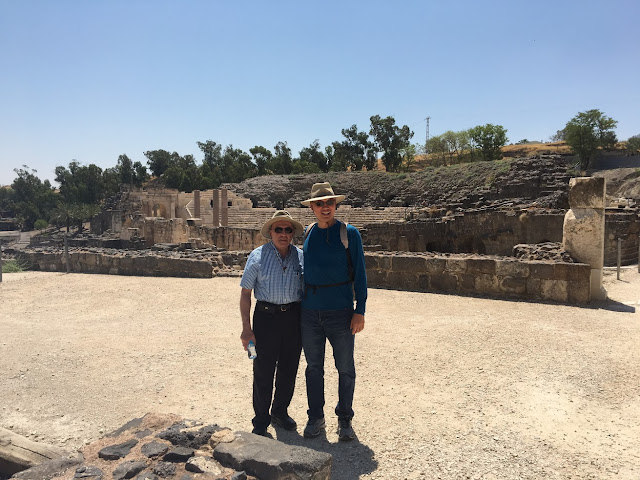
It was my first time in Israel. I met some new friends like Asaf Goldschmidt, Gadi Algazi, Mark Gamsa, Ron Sela and saw many old friends and colleagues. The organizer Ori Sela impressed all of us with his attention to details and logistics, gourmet food, boutique hotel, beautiful campus and, most importantly, intellectual stimulation and archaeological tours! Ori also demonstrated his superhuman ability to participate in two intense conferences consecutively over the span of five days. The first one is called Rethinking Time in Modern China: An Sinological Intervention and the second one Asian Spaces: Border-crossing Dialogues . Moreover, Ori took us to two archaeological sites: Beit She'an and Tel Megiddo . Below is a picture of me and my PhD advisor Benjamin Elman in Beit She'an. Facing the Roman baths in Beit She'an.

Matthew Mosca's review of China's Transition to Modernity in the first issue of Journal of Chinese History

Image
Professor Mosca is a meticulous reader. His summary of my book intrigues me, and I agree with his identification of all ambivalent and ambiguous parts of my interpretation. I truly appreciate this review .

On-cho Ng's review of China's Transition to Modernity on The Journal of Asian Studies (JAS)

Image
Professor Ng's review provides an interesting distinction between retrospective and prospective dimensions of my work. Some food for thought.

UCSC seminar––part 8

The eighth set of readings is Tonio Andrade's The Gunpowder Age , which encompasses a fairly large literature on history of science, technology, warfare, state formation and competition. Andrade asks a poignant question: How did Europe conquer the world? Industrial revolution and capitalism alone could not explain Europe's military conquest and colonial power around the world. Steamships could go far and fast around the globe, but the cannons equipped on the steamships were the main advantage for them to defeat Chinese navies. How did this great divergence of military technology take place? Andrade's part 3, dubbed the age of parity, describes several battles between Dutch and Zhengs in Taiwan on the one hand and the Manchu-Korean coalition against the Cossacks on the other. I think this is the best part of the book and the most important contribution he makes to the field. He explains in convincing details why Europe's military technology advanced while the Ming dyna...

UCSC seminar–part 7

The seventh set of readings include parts 2 and 3 of Matthew Sommer's Polyandry and Wife-selling in Qing Dynasty China and a collection of judicial records called True Crimes in Eighteenth-century China , translated and edited by Robert Hegel. Sommer speaks broadly to two bodies of literature. The first (social and economic history) searches for the roots of social crisis and revolution in China. The second (social anthropology) analyzes the disjunction between a variety of non-normative marriages and some practices were stigmatized but solved problems and met needs that normative noes could not. His case studies on wife sale is our focus. By meticulously tabulating and classifying his cases from court central archive to various local archives, Sommer analytically divides his cases into "anatomy of a wife sale," "prices in wife sales," "negotiation between men in wife sales," and "wives, natal families and children." Then he brought them t...

UCSC seminar–part 6

The sixth set of readings includes Andrea Goldman's  Opera and the City  and Stephen Roddy's " Toward a Buddhist Cosmopolitanism" and " Cultural Solidarity in Troubled Times." In this section we examine the contested and moving lines between China's elite and popular cultures as well as between center and periphery in the nineteenth century. Goldman's Opera and the City can be read along four lines of inquiry. (1) The difference between urban and rural experience. She lists three kinds of venues for theatrical performance in Beijing–commercial playhouses, temple fairs and salon. Only temple fairs were available in rural market towns, depending on the economical scale of each town. (2) Grey area between elite and popular cultures. The entertainment values of sex and violence came largely from popular imagination based up some historical anecdotes or fictions like Water Margins. What was considered high brow (Yabu) or low brow (huabu) could be att...

UCSC seminar–part 5

The fifth set of readings includes A lexander Woodside's Lost Modernities and the first two parts of Benjamin Elman's Civil Examinations and Meritocracy in Late Imperial China . Let us focus on rational bureaucracy as a form of modernity and how its institution–civil service examination system–endured for more than seven hundred years. As Richard von Glahn has shown, the rise of market economy was coupled with transformation of social and political elites from aristocrats to "literati" during the Tang-Song transition. Literati then thrived on the expansion of civil services until 1850. How does Elman account for its history? Woodside, on the other hand, describes the rise of postfeudal professional bureaucrats in China, Korea and Vietnam as alternative modernities. These modernities then were lost in narratives of world history. What does he mean by that?

Review of Wai-yee Li's book

Academia Sinica in Taiwan recently elected Wai-yee Li to be its academician, which is widely considered as pinnacle of scholarly achievement in Sinophone world. Her book also wins Joseph Levenson Pre-1900 Book Prize in 2016, a coveted prize for China scholars. We need to account for the success of her book. My friend Xiaorong Li's review should be useful.

UCSC seminar–part 4

We venture into maritime history in East and Southeast Asia this week. The fourth set of readings includes  Leonard Blussé's Visible Cities and the first six chapters of Philip Kuhn's Chinese among Others . We will also read Melissa Macauley's new article: “ Entangled States: The Translocal Repercussions of Rural Pacification in China, 1869–1873 .” Kuhn sharply and clearly divides Chinese migration into two periods: early modern and modern ones. Each has a distinctive pattern, structure and scale. Early Modern Maritime Expansion and Chinese Migration: Chinese migrant communities coexisted with early colonial administration in Southeast Asia from the outset. They also sprawled outside the reach of these colonial empires, such as Portuguese, Spanish and Dutch. Blussé's book gives us a close look at VOC's trading networks from Dutch perspectives, but we get very little on Portuguese Malacca and Spanish Manila from his work. Kuhn's coverage is way more compreh...

UCSC seminar–part 3

The third set of readings is Richard von Glahn's new book, The Economic History of China , published by Cambridge University Press in 2016. The most salient feature of this book is its periodization, which does not conform to either standard progression from ancient through medieval to modern history or from early through middle to late imperial history. It is better read against the framework set by Mark Elvin's The Pattern of the Chinese Past (Stanford, 1973). The rise of Jiangnan (market/money/silver/rice) economy: During the Tang-Song transition (775–1127), fundamental economic transformation took place in China. Four aspects of this transformation are decisive: (1) the formation of market economy linking all regions both inside and outside China proper; (2) Jiangnan emerged as the wealthiest region powering national economy; (3) high level of urbanization of large cities rivaling early modern European counterparts; (4) rice economy created labor-intensive and small ...